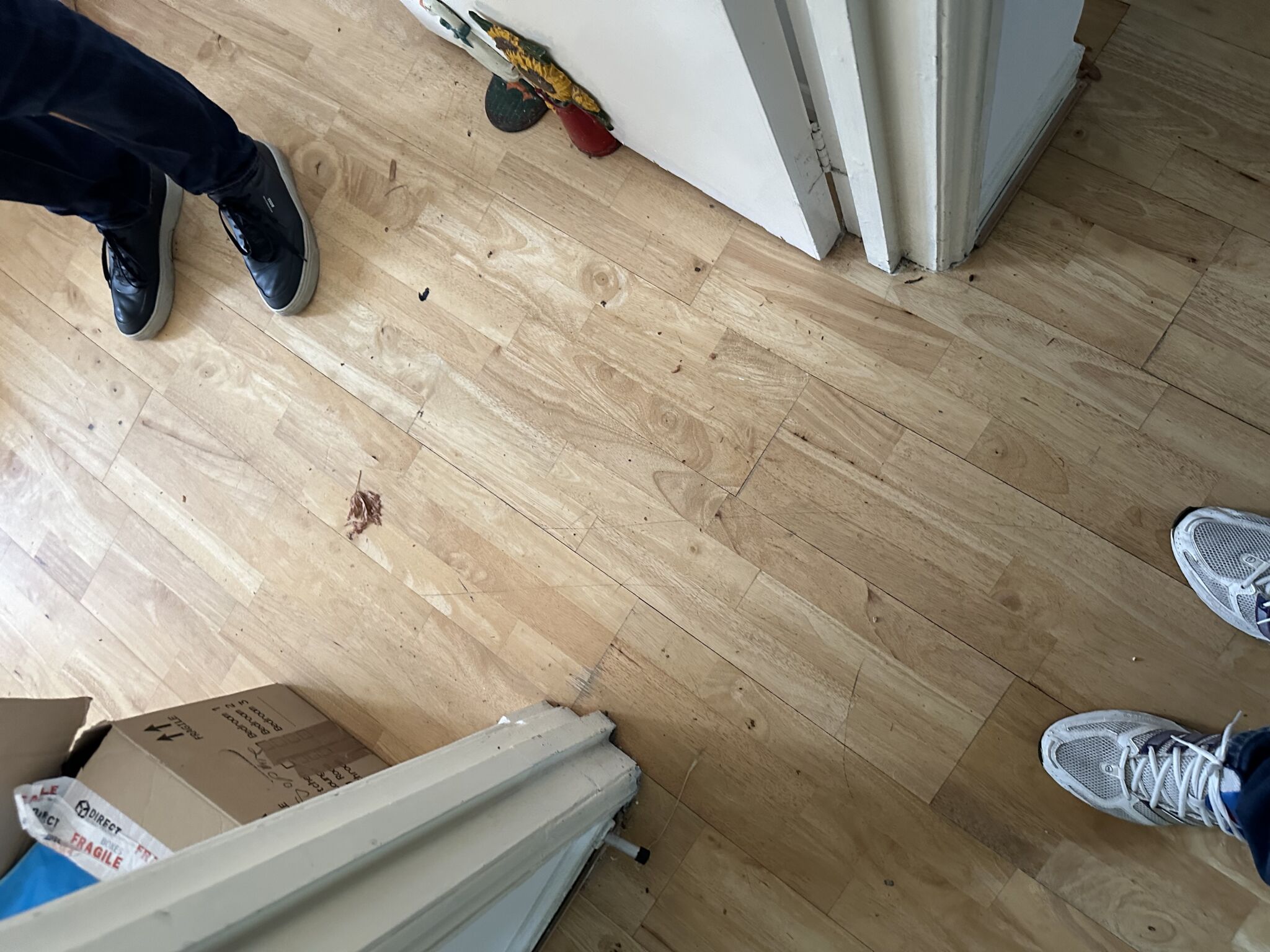
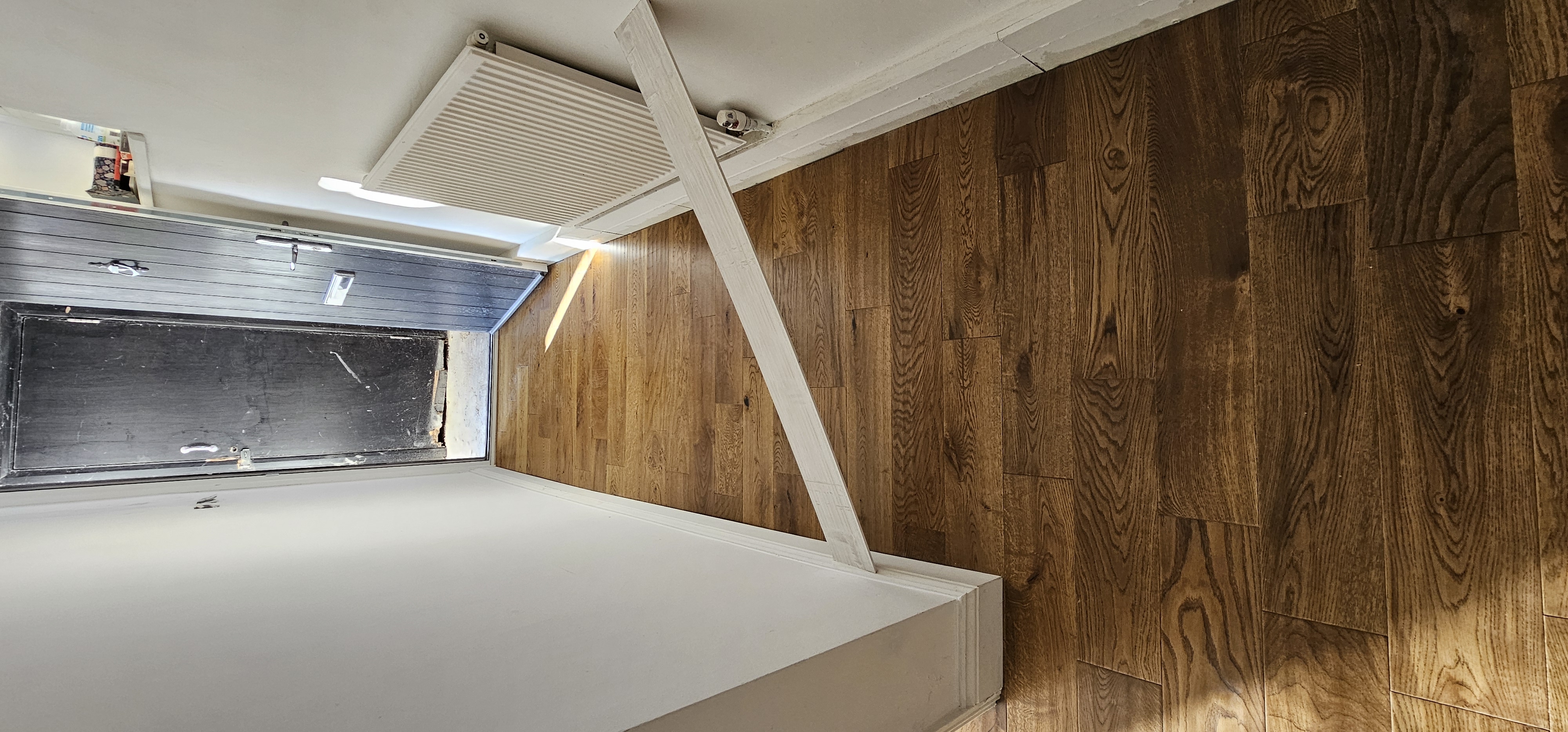
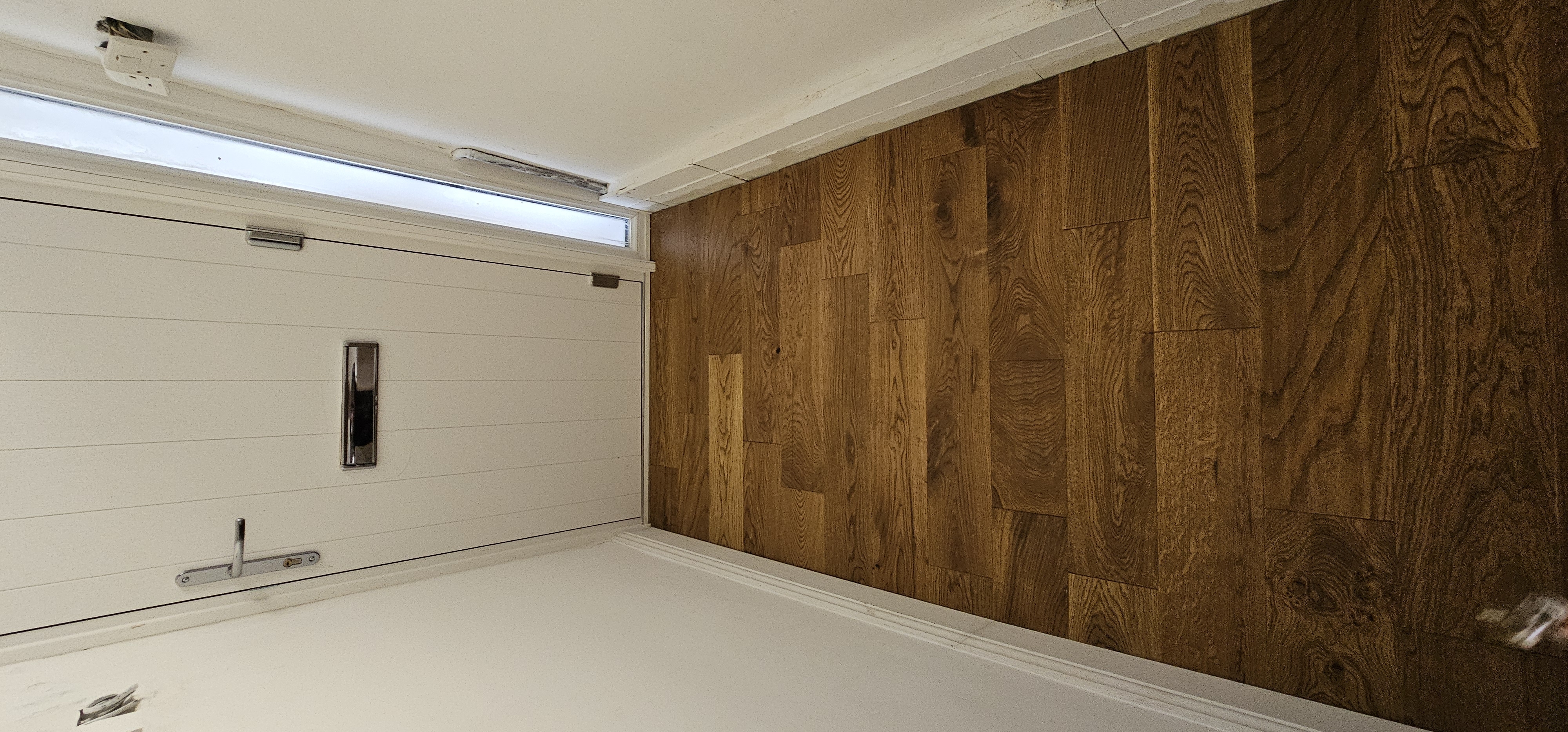
We recently fitted engineered wood flooring throughout a period property in East London, transforming tired carpeting into a warm, durable surface that suits the character of the building. This E7 residential project required careful preparation and precise installation techniques to ensure the new floor would perform well in an older property with uneven subfloors. The finished result provides the client with a practical, attractive flooring solution that will last for years with proper maintenance.
Work carried out
- Full site inspection and subfloor assessment
- Subfloor preparation and levelling where required
- Damp-proof membrane installation
- Engineered wood flooring installation using floating method
- Expansion gap management and threshold fitting
- Site cleanup and debris removal
- Aftercare advice and maintenance guidance
About the project
The property was a Victorian semi-detached house with original timber joists and concrete ground floors that showed signs of minor dampness. The client wanted engineered wood throughout the ground floor, which presented a genuine challenge given the moisture levels and uneven surface. We specified a quality engineered plank with a pre-finished surface and a thickness of 14mm, which is solid enough to handle slight variations in subfloor level without telegraphing them through to the surface. Before fitting anything, we installed a damp-proof membrane across the concrete areas to create a barrier between the ground moisture and the new floor.
Our approach involved leaving the engineered boards in the property for 48 hours before fitting, allowing them to acclimatise to the local humidity and temperature. This step matters far more than people think. We then fitted the flooring using a floating method rather than adhesive, which means the boards can move slightly with seasonal moisture changes without buckling or cupping. Threshold strips were fitted at doorways to create clean transitions and protect the edges of the boards. The entire ground floor took three days to complete, with final cleanup and edge protection applied before handover.
About our London, E7 service
East London has a high concentration of Victorian and Edwardian properties, many of which present similar challenges to the house we worked on here. These older buildings often have suspended timber floors upstairs and solid concrete downstairs, neither of which are ideal for traditional solid wood flooring without proper preparation. Engineered flooring is the practical choice for this area because it tolerates humidity fluctuations better than solid wood, making it suitable for properties where damp control may be ongoing rather than completely resolved. We also work frequently on new build developments in E7, where we encounter relatively straightforward installations on concrete slab foundations and engineered joists.
The mix of property types in E7 means we regularly encounter everything from original floorboards that need reinstating to completely bare concrete that needs complete treatment. Many local properties have uneven subfloors or slight movement due to age, which requires assessment and remedial work before new flooring goes down. We're familiar with the specific characteristics of the area and plan our projects accordingly, accounting for the time needed to deal with substrate issues that wouldn't affect a modern property. Our client base in E7 ranges from owner-occupiers to rental investors, and we tailor our recommendations to suit both residential comfort and long-term durability requirements.
Frequently asked questions
How much does engineered wood flooring fitting cost in London, E7?
Fitting costs for engineered flooring typically run from £35 to £60 per square metre, depending on the complexity of the subfloor, whether damp-proofing is needed, and the specific layout of the property. Older properties with uneven floors may be at the higher end of this range because preparation work takes longer. We always provide a detailed quote after site inspection rather than offering estimates over the phone.
How long does fitting take for a typical room?
A straightforward living room of around 25 square metres takes roughly one day to fit, excluding subfloor preparation. If levelling or damp treatment is needed, add one or two days depending on the extent of the work. We schedule projects realistically so we're not rushing the job or cutting corners on quality.
What preparation is required before fitting engineered flooring?
The subfloor must be clean, dry, and level to within 3mm across any 2-metre stretch. For concrete, moisture testing is essential, particularly in E7 where many properties have existing damp issues. Carpet and underlay must be removed completely. Any high spots should be sanded, and low areas may need levelling compound. We handle all this work and advise on what's necessary once we've inspected the property.