Monday - Friday 07:30 - 17:30, Saturday 07:30 - 16:00
Engineered Flooring in Kilburn, NW6
Back to Portfolio
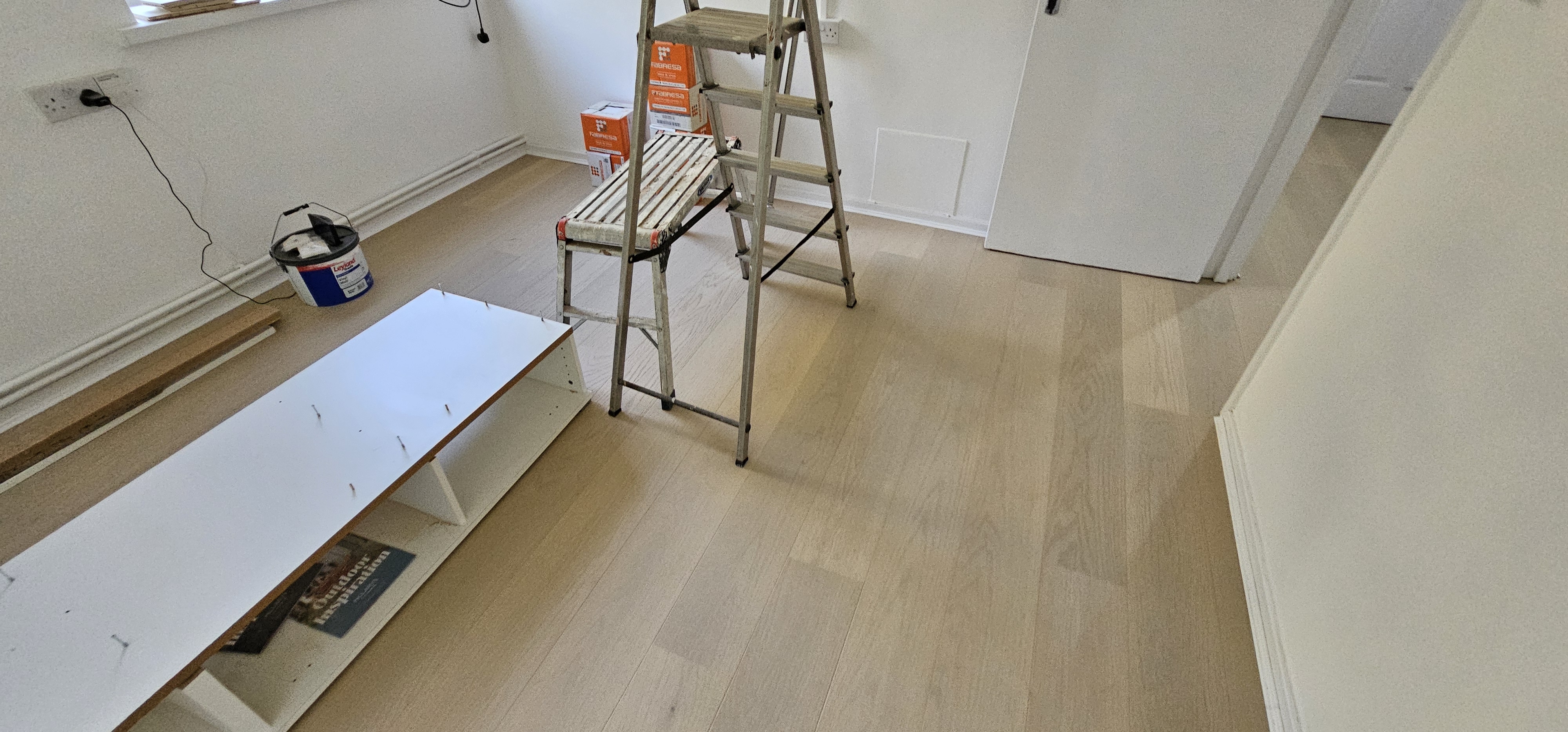
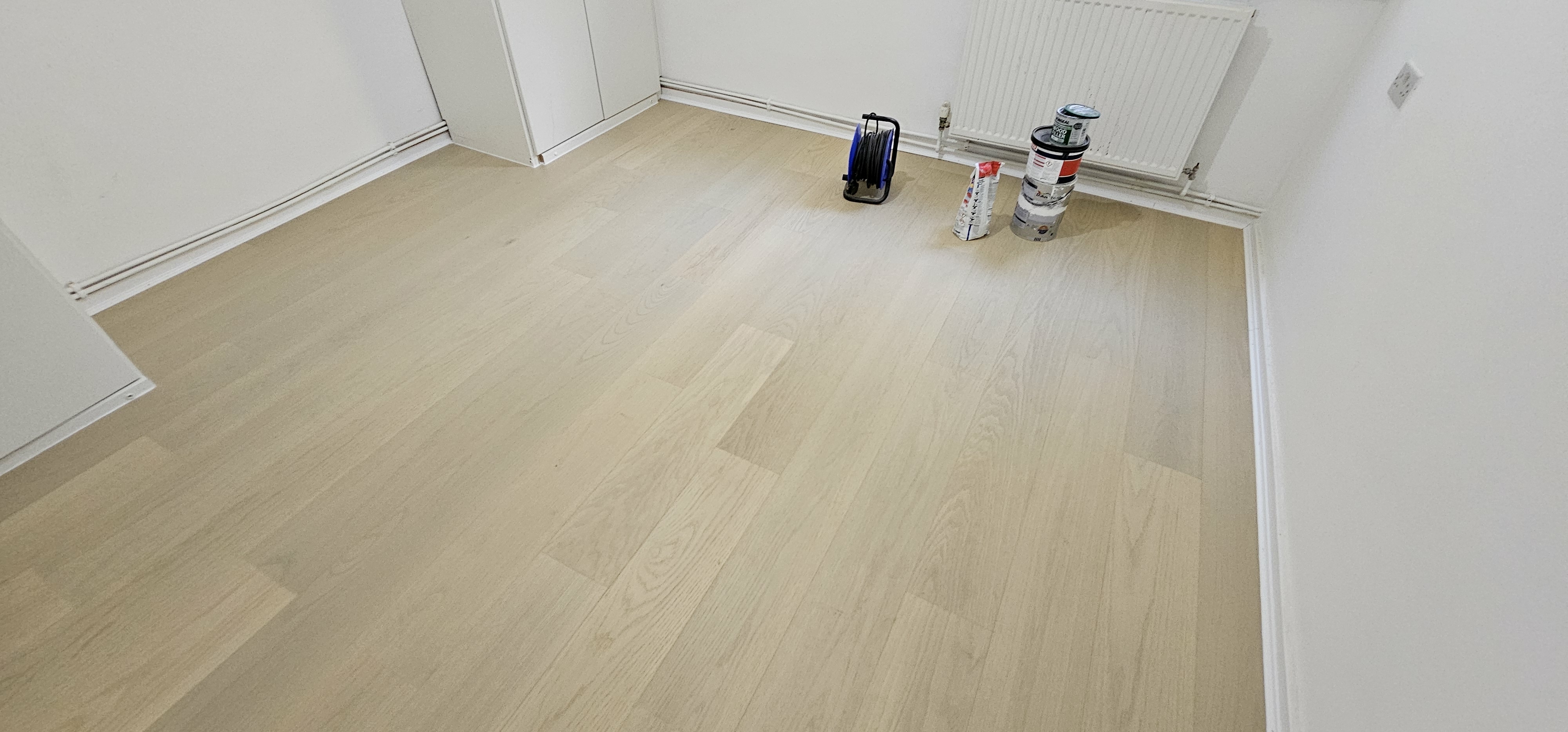
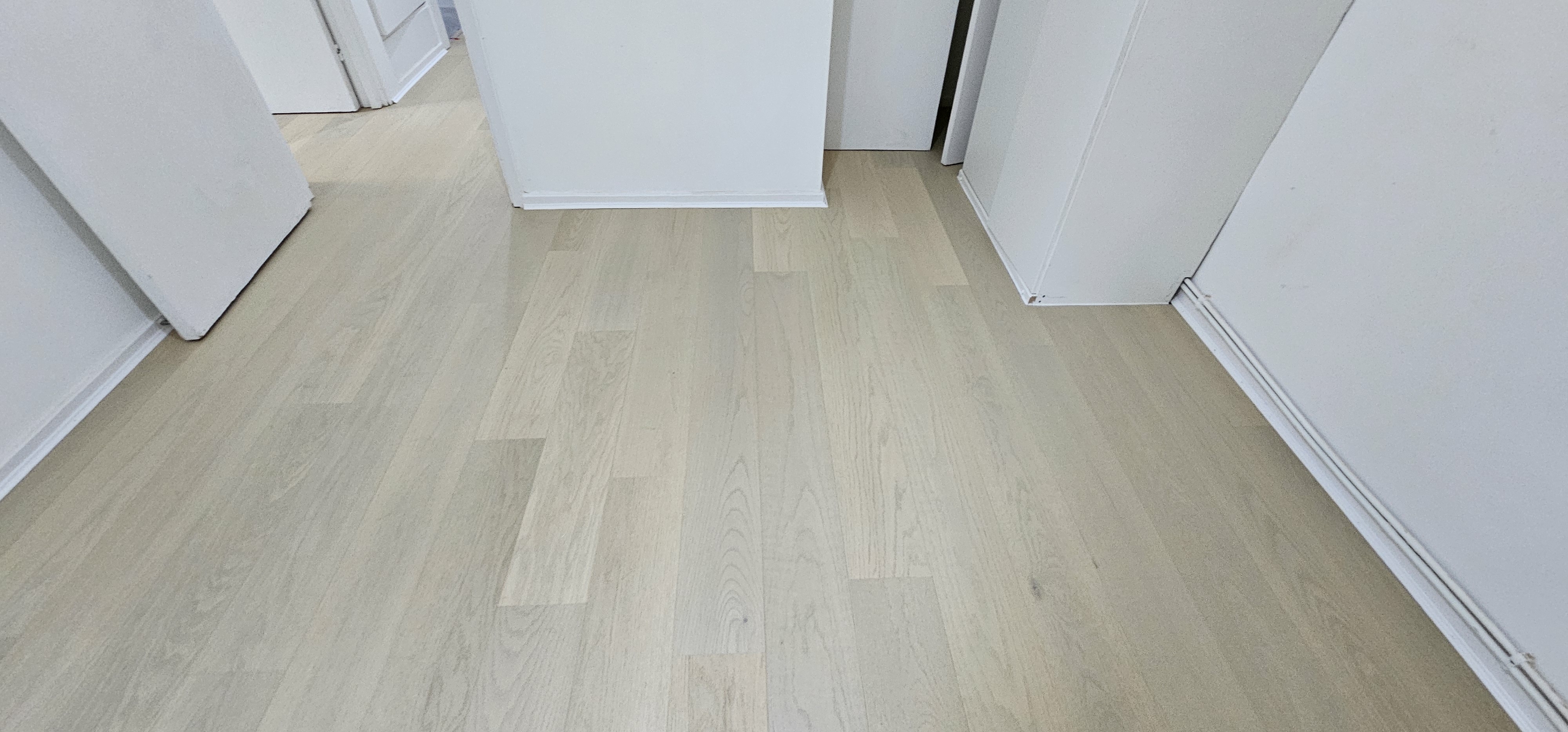
Engineered Flooring in Kilburn, NW6
This Kilburn property required complete engineered flooring installation across three rooms after a kitchen renovation. The owners chose a light oak engineered board to complement their Victorian terrace's period features whilst offering the practical durability needed for a busy family home. Our team managed the fitting from start to finish, dealing with the uneven substrate typical of properties in this area.
Work carried out
- Inspection and assessment of existing timber subfloor
- Preparation and levelling of substrate using self levelling compound
- Installation of engineered oak flooring using floating method
- Fitting of transition strips and expansion gaps
- Finishing and final checks
About the project
The property is a mid-terrace Victorian home in Kilburn, built around 1885. The owners had recently renovated their kitchen and wanted new flooring that would tie the space into the rest of the ground floor. They selected a 14mm engineered oak board in a light natural finish. The job required fitting across the kitchen, hallway, and dining room, totalling around 45 square metres of flooring.
The main challenge was the uneven floor surface left by the previous kitchen build. We found dips of up to 15mm across the room and some high spots where old adhesive remained from previous flooring. Rather than sand the boards, which would have been unnecessary and wasteful, we prepared the substrate carefully. We removed debris, fixed any loose timber, and applied self levelling compound to bring everything within tolerance. This approach meant the engineered boards would sit flat and perform properly without movement or gaps appearing later. The whole project took five working days from start to finish.
About our Kilburn, NW6 service
Kilburn has a diverse housing stock. Many properties date from the Victorian and Edwardian periods, typically three or four storey terraces with original timber floors. We also work with converted warehouses, 1960s purpose-built blocks, and some newer developments. The neighbourhood is popular with families and young professionals, so we see a mix of rental properties and owner-occupied homes being renovated. Victorian and Edwardian properties usually have solid timber joists or timber boarding, often needing repair before new flooring goes down. The challenge with older properties is getting the surface preparation right. What looks like a simple floor installation often requires dealing with structural movement, uneven substrates, and the legacy of previous repairs.
We've fitted thousands of metres of engineered flooring across Kilburn over the past decade. Most jobs involve either replacing worn carpet or updating properties during refurbishment. Engineered boards work well here because they handle the humidity variations common to London properties without the movement issues you sometimes get with solid wood. The area's period properties particularly suit engineered options, as the boards are easier to fit on existing timber floors and the lighter modern finishes complement original cornicing and period details better than heavy traditional parquet.
Frequently asked questions
How much does engineered flooring fitting cost?
Installation costs typically run between £35 and £60 per square metre, depending on site complexity. Simple level concrete requires less preparation than Victorian timber floors with dips and movement. We price each job individually after inspecting the substrate. For this Kilburn project at 45 square metres with moderate preparation needs, the fitting cost came to £2,160.
How long does fitting take?
A straightforward floating installation on prepared substrate typically moves at around 20 to 25 square metres per day for a two-person team. If substrate work is needed, add time accordingly. Our preparation often takes longer than the fitting itself. This job needed two days for preparation and levelling, then three days for the actual installation and finishing.
What preparation work is required before fitting?
We always check the existing surface for level, moisture, debris, and structural issues. Timber floors need loose boards screwing down or replacing. Concrete requires checking moisture levels and repairing damage. Any high spots are ground back, low areas levelled with compound. We won't fit flooring over a poor substrate because boards will move and gaps will appear within months. Getting this stage right determines whether your floor lasts 15 years or becomes problematic within two.
Project Gallery